

How a flintwork project works
A typical Flint & Form project starts with photos and a clear brief, then agreement on the right approach: matching existing flint, restoration and lime repointing, contemporary knapped work, or a mix. After scope and quote, we prepare the site, carry out the flintwork, and hand over a clean finish suited to the building.
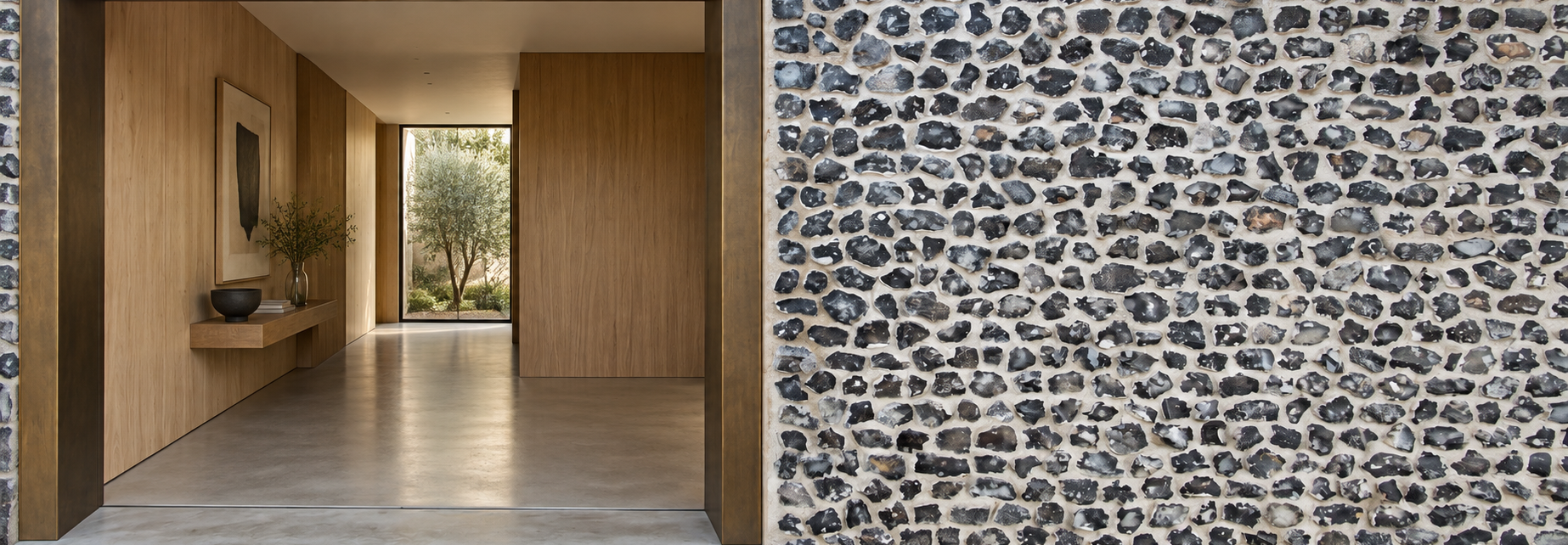
Flintwork goes wrong when the wrong approach is forced onto the building. Our process is built to choose the right treatment first, then execute it carefully.
We specialise in flint only. The steps below are the same whether the job is a short length of matching, a full elevation of lime repointing, or knapped flint on a new extension.
Step 1
Enquire with photos
What you send: property location or postcode; a short description of what you want to achieve; photos of the existing flint (elevations and close-ups of joints and pointing); drawings or sketches for extensions and new build, if you have them.
What we do: we review the material and the brief, and give an initial view on which approach fits: matching, restoration, contemporary knapped flint, or more than one on the same property.
Photos are usually enough for that first steer. Larger or more complex walls often need a site visit before a firm quote.
Step 2
Agree the right approach
Every flint wall is different. Before work is priced in detail, we align on the intent:
- Matching & alterations: new flint must continue an existing wall so old and new feel natural together
- Restoration & lime repointing: existing flint needs cleaning; unsuitable sand-and-cement pointing should be removed and replaced with lime
- Contemporary knapped flintwork: new build or extension wants a cleaner, more precise flint face, including cavity-wall detailing where required
Some projects use all three, for example matching internally, restoring external elevations, and knapped flint on a new wing. See Three approaches to flint on one property.
Step 3
Scope, site assessment and quote
Once the approach is clear, we define the scope: areas of wall, access, protection, whether cement pointing must be removed, mortar intent, and any coordination with your architect or main contractor.
A site visit is used when photos cannot settle questions about condition, access or junctions with other trades.
You receive a quote based on that scope, not a generic price per m² that would mislead. Timings are given with the quote and depend on wall area, weather windows for lime work, and whether matching, restoration and new work are combined.
Step 4
Prepare the wall and the site
Preparation depends on the job, but often includes:
- Protecting floors, gardens, openings and adjacent finishes
- Safe access / scaffolding arranged as required
- Careful removal of unsuitable sand-and-cement pointing (restoration)
- Cleaning dirt and organic matter from existing flint
- Setting out for matching or contemporary work (sample panels where useful)
- Coordinating cavity protection with the wider build on new cavity walls
We will not rush this stage. Good flintwork depends on a wall that is ready to receive it.
Step 5
Carry out the flintwork
Matching: flint is selected and laid to reflect the character of the existing wall (stone, pattern, joint width and mortar colour) so the new length reads as a continuation.
Restoration: after preparation, we repoint in lime mortar suited to the wall, aiming for an aged but crisp finish: clearer definition without making an old wall look newly built.
Contemporary knapped flint: selected knapped flint is laid with controlled joints and carefully formed corners at openings and edges. Where flint is the outer leaf of a cavity wall, appropriate cavity protection is incorporated so mortar is managed behind the face.
Workmanship focuses on consistent jointing, clean edges, and a finish appropriate to the agreed approach, not a single house style forced onto every elevation.
Step 6
Finish and handover
We clear the working area, remove protection, and review the finished flint with you against the agreed approach.
If useful, we note simple aftercare, for example allowing lime mortar to cure properly and avoiding early harsh cleaning. For projects alongside other trades, we confirm handover boundaries so the next stage of the build can proceed cleanly.
What we need from you
- Honest photos (wide shots and close-ups)
- Clarity on whether the wall should match, be restored, or read as contemporary
- Access constraints and whether the building is occupied
- Contact details for your architect or contractor if they are leading the project
Who this process is for
Homeowners instructing us directly; architects specifying flint on alterations or new elevations; main contractors needing a flint specialist coordinated into the programme. We stay with the flint. Brickwork, general building and other stone types are outside our scope.
How long does it take?
There is no single timeline. Duration depends on square metreage and complexity, whether cement pointing must be removed, matching vs restoration vs knapped new work (or a mix), access and scaffolding, and suitable weather for external lime work. We give a programme with the quote rather than promising a fixed number of days up front.
Process questions
How do I get a quote?
Contact us with the property location, a short description of the work, and photos of the existing flint or drawings for new work. We can then advise on approach and next steps.
Can you estimate from photos?
Photos are enough for an initial view and to say which approach looks right. A firm quote usually needs clearer scope, and often a site visit for larger or more complex walls.
Can one project use more than one type of flintwork?
Yes. It is common for an extension to need a close match against older flint, restoration of existing elevations, and a sharper contemporary finish on the new work.
How long will the work take?
It depends on wall area, access, whether cement pointing must be removed, weather, and whether matching, restoration and new work are combined. We give a programme with the quote rather than a one-size answer.
Ready to start?
Send photos and your postcode. We’ll tell you which approach fits and what happens next.